JD Vance and Political Influence
The relationship between JD Vance and Donald Trump represents a complex power dynamic within an administration increasingly influenced by wealthy backers, with both men maintaining mutually beneficial ties to tech billionaires and financial elites while operating within a hierarchy where Trump remains the ultimate authority despite the behind-the-scenes influence of oligarchic interests.
Curated by
graywolf78
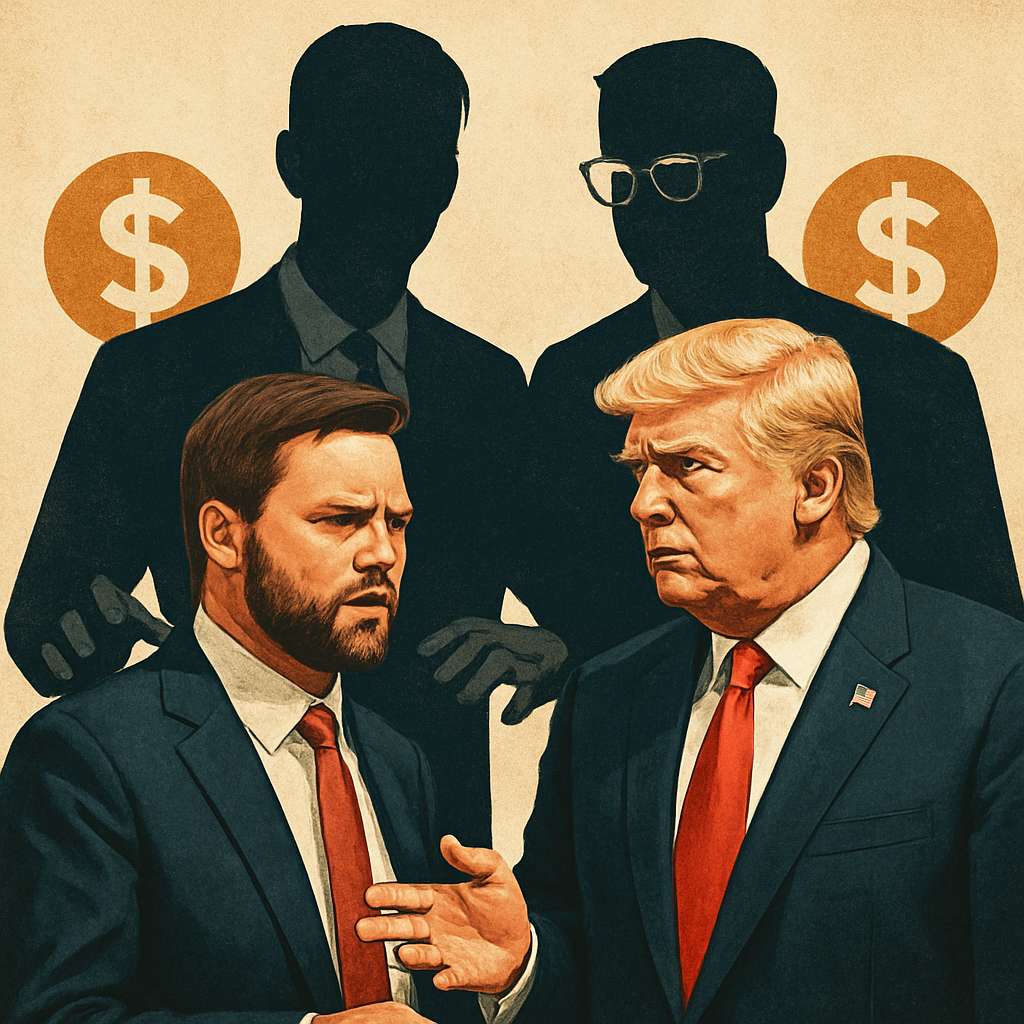
Oligarchic Influence in Politics
Silicon Valley elites have played a pivotal role in shaping the political trajectories of both JD Vance and Donald Trump. Vance’s rise to prominence was significantly bankrolled by tech billionaire Peter Thiel, who invested heavily in his Senate campaign and introduced him to influential tech circles.1 In a previously unreported speech, Vance explicitly called for conservatives to seek more support from oligarchs, positioning himself as a bridge between traditional Republican politics and tech wealth.2
The relationship between these political figures and their wealthy backers creates a system where policy decisions often align with oligarchic interests. Trump’s administration has been described as assembling “an administration of billionaires and warmongers whose combined wealth runs into hundreds of billions of dollars.”3 This concentration of wealth and power has led critics to characterize the current political landscape as moving toward an “American Oligarchy,” where unelected tech billionaires increasingly control sensitive government operations.4 The Las Vegas Sun reported that Vice President Vance defended this arrangement, writing on social media: “When a president is elected by the people and then does what he promised to do, that’s not an oligarchy—that’s democracy.
Trump-Vance Power Dynamic
The relationship between Trump and Vance has evolved into what insiders describe as a “buddy level” connection, with the two communicating almost daily and Trump expressing satisfaction with Vance’s frequent media appearances defending administration policies.1 Despite this apparent closeness, a clear power hierarchy exists where Vance has “learned his lesson” about not contradicting Trump publicly or getting ahead of him on policy matters.[Previous Answer] This dynamic reflects Trump’s well-documented pattern of quickly discarding allies who challenge his authority or become liabilities.
Behind this public rapport lies a complex web of shared financial backers and mutual dependencies. While Vance once criticized “Big Tech oligarchs,” he now operates within an administration where these same figures wield significant influence. The Supreme Court’s 2024 ruling in Trump v. United States has further concentrated power in the presidency by establishing a three-tiered immunity framework that shields many presidential actions from legal scrutiny.3 This constitutional shift reinforces Trump’s position as the indispensable figurehead in an administration where both men serve as vehicles for advancing the agenda of their shared oligarchic patrons rather than as truly independent political actors.
Cabinet Role in Governance
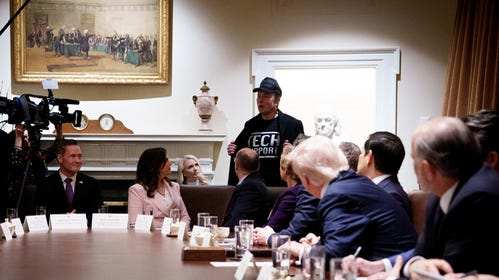
The Trump administration’s cabinet serves as a critical conduit for oligarchic influence, with members drafting executive orders that are later presented to Trump for signature with minimal briefing. This governance model emerged clearly when Trump began issuing controversial executive orders within hours of taking office in January 2025, many of which legal experts deemed unconstitutional—prompting over 1,000 law professors to sign a letter declaring “we believe we are in a constitutional crisis.” The administration has assembled what critics describe as a “merry band of corrupt oligarchs and sycophants” who effectively control policy formation while maintaining Trump as the public face and final signatory.
Cabinet members with direct ties to corporate interests have been documented crafting policies that directly benefit their wealthy backers, as evidenced by the administration’s rollback of cryptocurrency regulations coinciding with the Trump family’s ventures receiving a $2 billion investment from Abu Dhabi.1 This system operates with increasing impunity as traditional oversight mechanisms falter—the administration has repeatedly ignored federal court orders, including continuing deportations despite judicial restraining orders and proceeding with fund freezes after courts explicitly prohibited such actions.12 Harvard professor Alex Keyssar characterized these developments as potentially “the most severe attack on the rule of law in the United States since confederate armed forces began lobbing artillery shells into Fort Sumter in 1861.”
Constitutional Implications

The erosion of constitutional safeguards has created an environment where oligarchic influence flourishes unchecked. The Emoluments Clause, which prohibits presidents from receiving payments from foreign governments without congressional consent, appears directly violated by the $2 billion investment from Abu Dhabi’s government into Trump family cryptocurrency ventures.1 Unlike previous presidents who carefully separated themselves from business interests, the current administration has embraced unprecedented conflicts while the Supreme Court’s expansion of presidential immunity in Trump v. U.S. severely limits accountability mechanisms.1
This constitutional crisis is exacerbated by systematic failures in traditional checks and balances. Federal judges have found probable cause of criminal contempt as the administration ignores direct judicial mandates, yet these findings carry no practical consequences.1 The Department of Justice transformation enables unprecedented presidential control over law enforcement, while congressional oversight has deteriorated with legislators largely abandoning their constitutional role as a co-equal branch.1 This perfect storm of DOJ control, congressional acquiescence, and judicial enforcement limitations enables constitutional violations to continue without meaningful consequences, creating an irreconcilable conflict between constitutional duties and personal enrichment.1
20 sources
Constitutional Implications of Oligarchic Governance
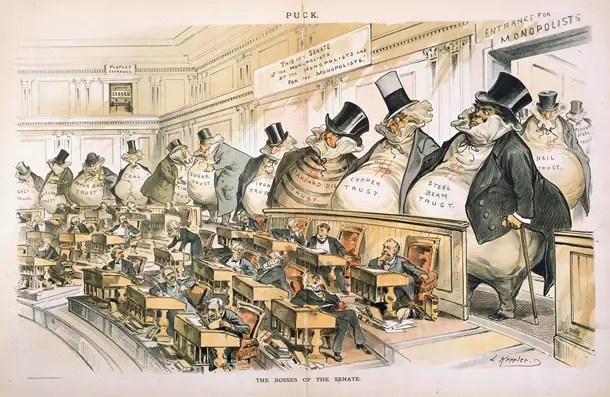
Oligarchy is an…
Oligarchic democracies emerge when constitution-making processes structurally privilege and sustain neoliberal interpretations that favor concentrated wealth and power1. This constitutional problem manifests not merely through legal text, but through competing discourses where oligarchs manipulate the legal system to favor capital accumulation while undermining public goods provision1. The constitutional danger lies in how economic and political power become mutually reinforcing—creating a system where “sufficiently extreme concentrations of power may threaten the Constitution’s democratic foundations”2.
The anti-oligarchic constitutional tradition recognizes two primary dimensions of concern: the degree of substantive equality in the public sphere, and the boundaries between public and private spheres3. Constitutional provisions that extend substantive equality of power in public life are inherently anti-oligarchic, as they prevent wealthy interests from exercising what philosophers call imperium (public power)3. Similarly, provisions that maintain public control over resources rather than privatizing them prevent oligarchs from exercising dominion—the power arising from private ownership that can ultimately undermine democratic governance3. This tension between constitutional ideals and oligarchic reality creates what scholars identify as the fundamental challenge: developing constitutional language adequate to address inequality and its corrosive effects on democratic institutions


Leave a Reply