Raphael Glucksmann urges America to return New York City’s famed statue, citing divergent values in the Trump era
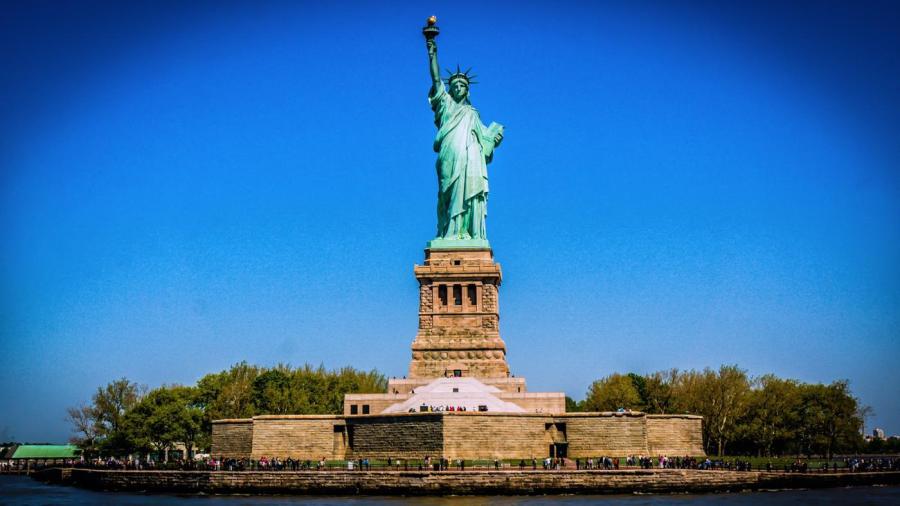
The Statue of Liberty is important as a symbol of freedom and friendship. The statue has also come to serve as a representation of the United States itself.
The Statue of Liberty was developed as a sign of the friendship that developed between the people of France and the U.S. during the American Revolution. It is described as a sign of the mutual desire for liberty as expressed by both countries. The statue has become a representation of global friendship, freedom and democracy. It stands in the Upper New York Bay, and it has been viewed by millions of newcomers and immigrants as they entered the country.
The Words: Emma Lazarus, through her poem “The New Colossus,” which includes the lines “Give me your tired, your poor, your huddled masses yearning to breathe free, the wretched refuse of your teeming shore. Send these, the homeless, tempest-tost to me,”
Lazarus was emphasizing the idea of America as a welcoming and inclusive nation that embraces those who are oppressed, impoverished, and seeking a better life. The poem reflects the values of compassion, freedom, and acceptance that Lazarus believed the United States should embody, particularly in welcoming immigrants who were marginalized and persecuted in their home countries. By invoking the Statue of Liberty as a symbol of hope and freedom, Lazarus was advocating for a more compassionate and open approach to immigration, highlighting the importance of embracing diversity and providing sanctuary to those in need. Overall, Lazarus’s poem serves as a powerful statement about the American ideals of liberty, equality, and the promise of a better future for all who seek it.
France gave the Statue of Liberty to the United States as a gift and sign of friendship between the two nations. The construction developed into a joint project between the two countries, with the U.S. becoming responsible for the statue’s base and pedestal. Fundraising for the American portion of the work became a problem, however, until publisher Joseph Pulitzer intervened and raised money through a successful publicity and donation program.
Sculptor Frederic Auguste Bartholdi was commissioned by France to create the statue. He intended it to be completed in time for the 1876 U.S. centennial celebration, but only the torch and the forearm were ready for display at the Philadelphia Centennial Exhibition. The statue was finally completed in 1884 and was shipped to the U.S. in late 1885. The base and pedestal were finished the following spring, and the completed monument was dedicated on October 28, 1886. It officially became a U.S. National Monument in 1924.
Raphael Glucksmann urges America to return New York City’s famed statue, citing divergent values in the Trump era
France should take back the Statue of Liberty because the US no longer represents the values that led France to offer the statue, a French Euro-deputy said on Sunday.
“Give us back the Statue of Liberty,” centre-left politician Raphael Glucksmann said at a convention of his Place Publique centre-left movement.
“We’re going to say to the Americans who have chosen to side with the tyrants, to the Americans who fired researchers for demanding scientific freedom: ‘Give us back the Statue of Liberty’,” he told cheering supporters.
“We gave it to you as a gift, but apparently you despise it. So it will be just fine here at home,” he added.

The Statue of Liberty was unveiled in New York City’s harbour on October 28, 1886 for the centennial of the American Declaration of Independence as a gift from the French people to America. It was designed by Frenchman Auguste Bartholdi.
France does have a far smaller copy of the statue on a small island on the Seine river in Paris.
Glucksmann, a staunch defender of Ukraine, has strongly criticised President Donald Trump’s radical change of US policy on the war.
He also took aim at Trump’s cuts to US research institutions, which has already prompted a French government initiative to attract some of them to work in France.
“The second thing we’re going to say to the Americans is: ‘If you want to fire your best researchers, if you want to fire all the people who, through their freedom and their sense of innovation, their taste for doubt and research, have made your country the world’s leading power, then we’re going to welcome them’,” said Glucksmann.
Since Trump returned to the White House in January, his government has cut federal research funding and sought to dismiss hundreds of federal workers working on health and climate research.
Glucksmann also criticised far-right leaders in France, accusing them of being a “fan club” for Trump and billionaire Elon Musk, who is spearheading the US president’s efforts to cut spending.


Leave a Reply