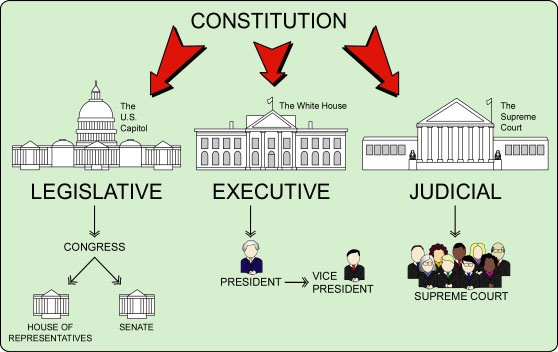
The U.S. Supreme Court is set to hear arguments in a case that could significantly reshape the balance of power between Congress, federal agencies, and the judiciary. At issue is the nondelegation doctrine, a constitutional principle that prohibits Congress from transferring its legislative authority to other entities without clear guidelines.
Nondelegation Doctrine Explained
The nondelegation doctrine is a constitutional principle that prohibits Congress from delegating its legislative powers to other entities without providing an “intelligible principle” to guide their actions12. Established in the 1928 case J.W. Hampton, Jr. & Co. v. United States, the doctrine aims to maintain the separation of powers by ensuring that Congress retains its lawmaking authority3. While the Supreme Court last used this doctrine to strike down a law in 1935, it has remained largely dormant for nearly 90 years4. Recent interest from several justices in examining the doctrine has reignited debates about its potential to reshape the balance of power between the legislative, executive, and judicial branches56.
FCC v. Consumers’ Research Case
On March 26, 2025, the Supreme Court will hear oral arguments in Federal Communications Commission v. Consumers’ Research, a case that could potentially revive the nondelegation doctrine after decades of dormancy1. The dispute centers on whether Congress improperly delegated authority to the FCC to fund “universal service programs” by allowing a board of telecom companies to set fees recouped from consumers2. The Fifth Circuit Court of Appeals previously ruled this delegation unconstitutional, arguing that Congress failed to provide an “intelligible principle” for determining fee amounts, effectively letting private entities exercise legislative power3. A decision in favor of Consumers’ Research could have far-reaching implications, potentially disrupting federal regulation across various sectors and expanding the Court’s role in policing congressional delegations to agencies42.
Implications for Regulatory Power
A reinvigorated nondelegation doctrine could fundamentally alter the regulatory landscape by shifting power from executive agencies to the judiciary. Courts would assume a more active role in scrutinizing whether Congress has provided sufficiently clear guidelines for agency actions, potentially invalidating longstanding regulatory frameworks. This shift could disrupt federal regulation across sectors such as environmental protection, healthcare, and telecommunications, requiring agencies to seek explicit congressional approval for major policy decisions12. Critics argue that such a change risks judicial overreach and could destabilize modern governance, while proponents view it as a necessary check on the expanding administrative state
Impact on Executive Orders
A stricter application of the nondelegation doctrine could significantly impact presidential executive orders, potentially limiting their scope and effectiveness. Executive actions relying on broad statutory language might face judicial challenges if courts determine that Congress has not provided sufficiently clear guidelines for agency authority1. This could affect both existing and future executive orders, particularly those aimed at implementing major policy shifts or reorganizing federal agencies without explicit congressional approval2.
The doctrine’s revival presents a dual-edged sword for executive power: while it may support efforts to roll back regulations deemed to exceed congressional authorization, it could also constrain the president’s ability to create new rules or reinterpret existing statutes3. This tension is particularly relevant in the current political climate, where the doctrine’s application could both empower and restrict presidential initiatives, depending on how courts interpret the constitutional limits of delegation4.
Early Nondelegation Doctrine Cases
The early development of the nondelegation doctrine in the United States can be traced back to the 19th century, with key cases establishing its foundations:
Wayman v. Southard (1825): Chief Justice John Marshall distinguished between “important” subjects and “mere details,” allowing Congress to delegate power to fill in details under general provisions1. This case set a precedent for permissible delegations of authority.
Field v. Clark (1892): The Court affirmed that Congress cannot delegate legislative power while upholding certain executive actions as not constituting lawmaking1. This decision further refined the boundaries of acceptable delegation.
These early cases laid the groundwork for the doctrine’s evolution, establishing principles that would later be tested in the landmark 1935 cases of Panama Refining and Schechter Poultry2. The Court’s approach in these early decisions reflected a practical understanding of the need for some delegation in an increasingly complex society, while still maintaining the separation of powers enshrined in the Constitution3.
Potential Impact on Modern Administrative Agencies
A revival of the nondelegation doctrine could profoundly reshape the modern administrative state, potentially curtailing the authority of federal agencies across various sectors. Key impacts may include:
Increased congressional specificity: Agencies like the EPA, FDA, and SEC might require more detailed legislative mandates to justify their regulatory actions12.
Regulatory uncertainty: Existing rules and regulations could face legal challenges, potentially destabilizing industries reliant on current regulatory frameworks3.
Shift in rulemaking power: The doctrine’s resurgence may encourage Congress to reclaim some regulatory authority from agencies, altering the balance of power in federal policymaking4.
Enhanced judicial scrutiny: Courts could play a more active role in evaluating the constitutionality of agency actions, potentially leading to increased litigation and regulatory delays56.
These changes could significantly impact the agility and scope of administrative agencies, potentially reshaping their role in addressing complex societal and economic issues.


Leave a Reply