Curated by graywolf78
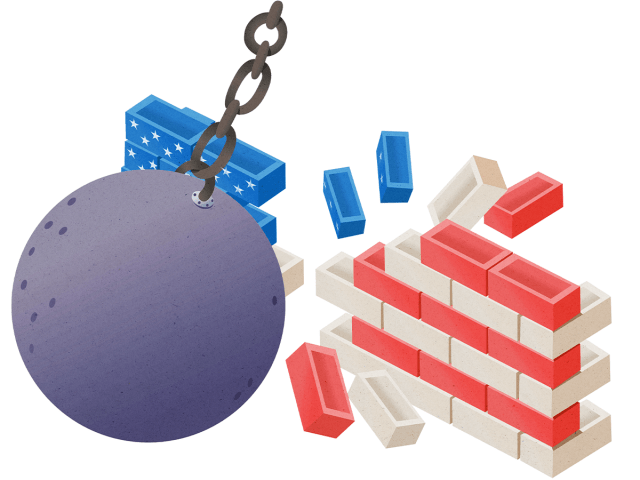
Before delving into the main analysis, it’s important to note that the current two-party dominance in America faces significant criticism despite its long history. Both Democrats and Republicans at the federal level struggle with public approval, though they maintain their grip on power through various mechanisms including the simplification of complex issues.
Historical Concerns About Two-Party Dominance
Two-Party System …
The critique of two-party systems isn’t new. In his farewell address, George Washington warned that political parties might become “potent engines by which cunning, ambitious, and unprincipled men will be enabled to subvert the power of the people”1. Similarly, John Adams worried that “a division of the republic into two great parties… is to be dreaded as the great political evil”2. These founding concerns have proven prescient as our current political landscape reveals the limitations of binary political choices.
2 sources
How Issue Oversimplification Maintains the Two-Party System
The Mechanics of Oversimplification
One of the most effective ways the two-party system perpetuates itself is through the oversimplification of complex problems into binary choices. This process:
Reduces Nuance to Binary Options: Complex policy matters are compressed into simplistic “for or against” positions that align with party platforms1.
Creates False Dichotomies: Voters are presented with artificial either/or choices on issues that actually have multiple dimensions and potential solutions2.
Employs Strategic Framing: Political messages are carefully crafted using grammar and metaphor to influence voter perceptions, often oversimplifying complex realities3.
Examples of One-Line Issue Politics
The oversimplification pattern appears across numerous policy areas:
Economic Policy: Democrats frame their approach as “helping the middle class” while Republicans focus on “growing the economy through tax cuts,” when economic policy involves countless interrelated factors4.
International Relations: Complex diplomatic situations are reduced to “strong” versus “weak” positions, ignoring the nuanced realities of global politics1.
Social Issues: Multifaceted cultural and social concerns are compressed into simplified partisan stances that ignore important gray areas and tradeoffs2.
Why the Two-Party System Fails Modern America
Structural Limitations
Political Stagnation: With only two dominant parties, legislative processes often become gridlocked as each party prioritizes its agenda over collaborative governance1.
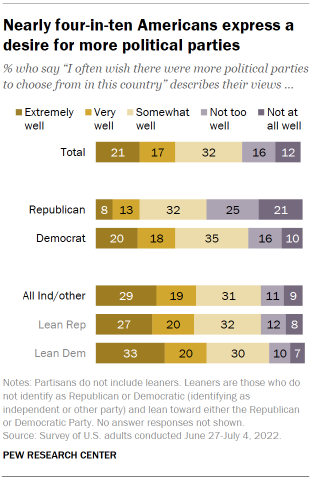
Voter Representation Gap: The binary system forces voters to choose between platforms that may not represent their actual views, creating a democratic deficit2.
Policy Oscillation: Each administration tends to undo the previous administration’s work, creating inconsistent governance patterns rather than stable long-term policies13.
Social Impacts
Increased Polarization: The “you’re either A or B mentality” drives citizens apart, creating social divisions that extend beyond politics4.
Voter Disillusionment: When neither party adequately represents voters’ interests, political apathy and decreased participation follow1.
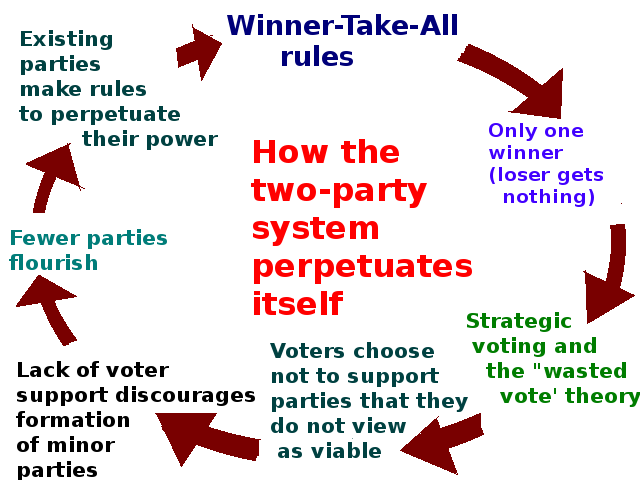
Suppression of Alternative Voices: Third parties and independent candidates struggle to gain traction in a winner-take-all system, limiting political innovation21.
Convincing the Unconvinced: Beyond One-Line Politics
Highlighting Systemic Failures
To convince people that the two-party system is fundamentally flawed, point to:
The Framing Problem: How issues are presented through careful language choices often manipulates rather than informs voters1.
Historical Warnings: America’s founders themselves cautioned against this exact political arrangement we now face23.
International Comparisons: Multi-party democracies often provide more nuanced representation of citizens’ views through coalition governments4.
Exposing the Limitations of One-Line Politics
Complex Problems Require Complex Solutions: No serious national challenge can be adequately addressed through the oversimplified framings offered by either major party56.
False Binary Choices: Demonstrate how presenting issues as having only two possible positions artificially limits the range of potential solutions7.
The Implementation Gap: Point out how the oversimplified campaign promises rarely translate to effective governance after elections8.
Potential Alternatives to Consider
The two-party…
Electoral System Reform: Ranked-choice voting or approval voting could break the dominance of the two-party system1.
Proportional Representation: Multi-member districts could allow for more diverse political representation2.
Stronger Local Governance: Shifting focus to local and state politics might create space for more nuanced approaches to community problems3.
Conclusion
While the two-party system offers certain advantages like simplicity and stability12, these benefits increasingly fail to outweigh the costs of political polarization, oversimplification, and inadequate representation. The reliance on one-line issue politics perpetuates a system that reduces complex problems to binary choices, leaving many Americans feeling unrepresented.
To convince people that this system no longer serves our complex modern society, focus on exposing the artificial constraints it places on political discourse and problem-solving. As one commenter succinctly noted, “Anyone who is adamant about a solution probably oversimplified the problem”3. Our political structures should reflect the complexity of the challenges we face rather than reducing them to simplified partisan talking points.


Leave a Reply