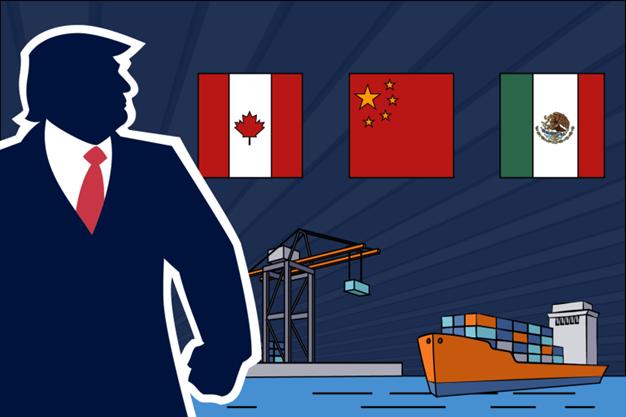
The United States-Mexico-Canada Agreement
The United States-Mexico-Canada Agreement (USMCA) establishes an essential framework for tariff exemptions, providing relief to qualifying goods from Canada and Mexico. As of March 7, 2025, products that meet specific USMCA rules of origin are exempt from the 25% tariffs imposed by the U.S. on March 4, 2025. This exemption, announced by President Trump, remains in effect until April 2, 2025, enabling companies to adjust their supply chains and ensure compliance. However, products that do not qualify for USMCA origin will still be subject to the full tariff, underscoring the significance of origin certification and supply chain optimization for businesses operating in North America.
Canada has implemented several export diversification strategies to reduce reliance on the U.S. market. The government launched a C$5 billion program to help exporters access new global markets, along with an additional C$1 billion in financing for agricultural enterprises. Trade missions and funding initiatives like CanExport and the Canadian International Innovation Program (CIIP) support businesses in exploring international opportunities. Canada is also leveraging agreements such as the Comprehensive and Progressive Agreement for Trans-Pacific Partnership (CPTPP) and its Indo-Pacific Trade Strategy to target emerging markets in Asia. The country is focusing on sectors like agrifood, clean technologies, mining, aerospace, and ICT to align with specific market demands in regions like Europe and Asia, with Germany being a key focus for innovation partnerships.
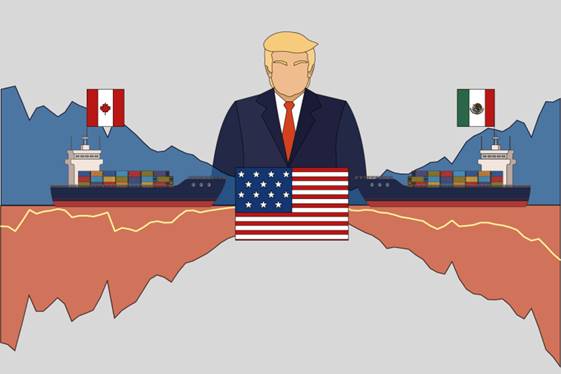
Mexico has actively pursued bilateral trade agreements with countries outside North America to reduce its dependence on the U.S. market. The country’s competitive agricultural sector, including beef and roses, is targeting new markets like Canada and beyond, leveraging efficient planning and favorable agro-environmental conditions. Mexico is also positioning itself as a cost-effective alternative to China for manufacturing, capitalizing on its geographic proximity to North American markets and competitive labor costs. Additionally, Mexico’s growing middle class and consumer base present opportunities for exporting higher-value goods while fostering partnerships in sectors like aerospace, automotive, and green technologies.
Amid rising trade tensions with the U.S., both Canada and Mexico are actively pursuing alternative trade partnerships to diversify their export markets. Canada is strengthening ties with the European Union, particularly Germany, through initiatives like participation in the Hannover Messe trade fair to foster innovation partnerships. Meanwhile, Mexico has seen increased trade with China, including a significant $2 billion electric vehicle plant deal, demonstrating its ability to pivot towards new economic relationships. These strategic moves aim to enhance economic resilience against tariff-related disruptions and reduce dependency on the U.S. market, although such shifts can be gradual due to existing infrastructure and logistical challenges.


Leave a Reply